Fragile and conflict-affected settings
Conflict-affected settings are often characterized by high levels of corruption and economic crime, which can drive conflict dynamics and exacerbate instability. This impedes the rule of law and state effectiveness, as well as the efforts to build peace and foster sustainable development.
The combination of weak institutions and fragile governance structures provides increased opportunities for corruption with a relatively low risk of detection. Corruption can also exacerbate inequitable wealth distribution and social and identity-related divisions, further destabilizing State structures and emboldening non-state armed groups.
The importance of addressing corruption as part of efforts to keep peace and build sustainable development is increasingly recognized. While there is no ‘one-size-fits-all’ approach to prevent and fight corruption in conflict-affected settings, UNODC has been identifying and implementing specific strategies, methodologies and tools to support the implementation of the United Nations Convention against Corruption in several conflict and post-conflict environments around the world.
This area of work also builds on the partnerships developed by UNODC with peacekeepers and peacebuilders to initiate joint efforts against corruption. The 2020 UN common position to address global corruption recommends that peacekeeping and special political missions “be designed and implemented with a clearer anti-corruption lens with the objective of reinforcing a culture of integrity, transparency and accountability and respect for the rule of law in their countries of operation”.
The UN General Assembly, in its political declaration adopted during the special session against corruption in 2021, invited UNODC, as the lead entity on anti-corruption within the UN system, to increase coordination and cooperation with the Department of Political and Peacebuilding Affairs (DPPA) and the Department of Peace Operations (DPO) of the UN Secretariat with a view to strengthening the rule of law and anti-corruption measures in UN peacekeeping and peacebuilding efforts. This message was also echoed by the Conference of the States Parties in its resolution 9/2.
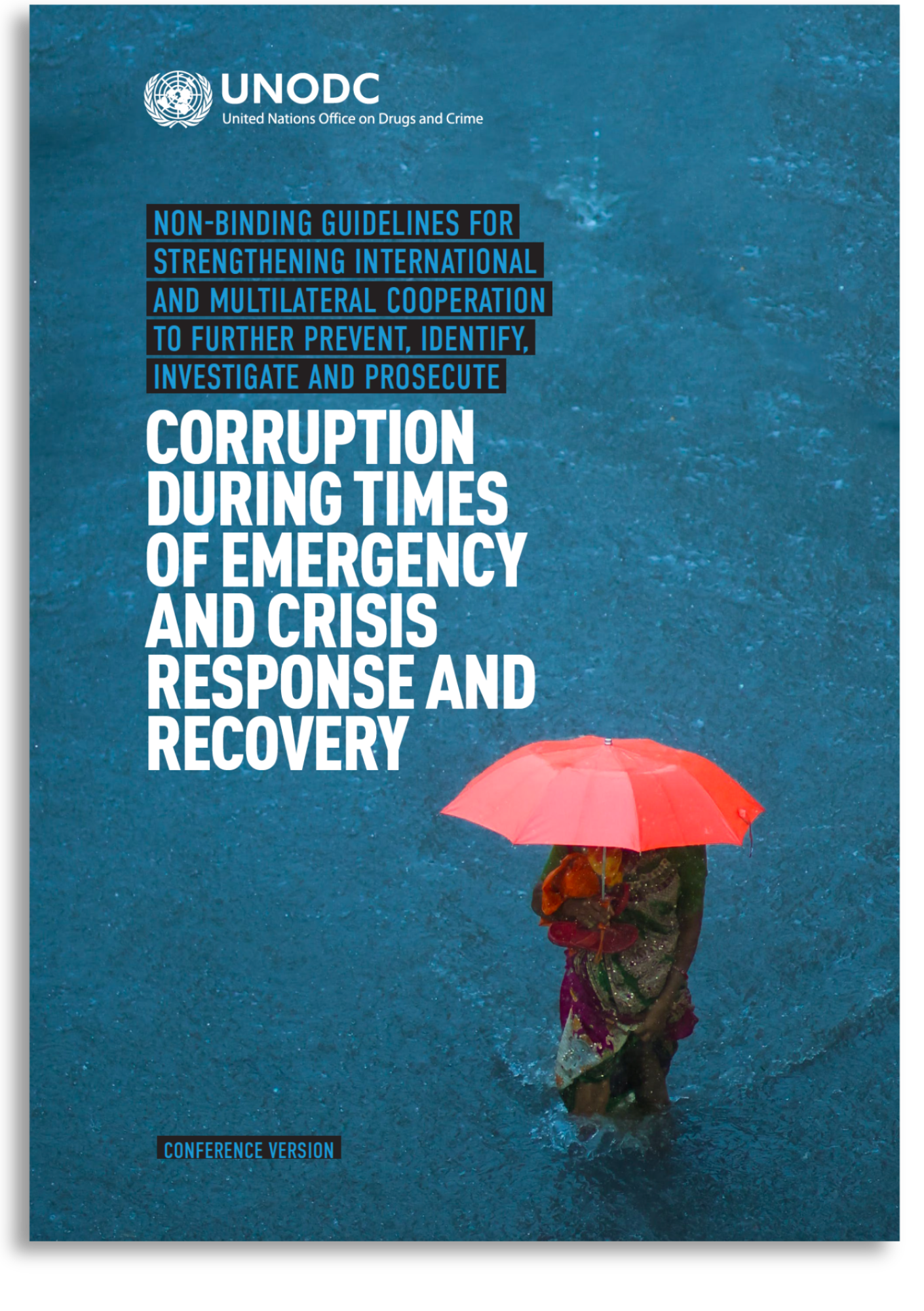
Emergencies and crises response and recovery
In times of emergencies – whether public health crises, humanitarian crises, natural or climate-related disasters, conflict driven or security crises – swift responses are often vital to ensure the delivery of essential goods, services and economic relief. However, the urgency to act often leads to increased risks of compromises and shortcuts in transparency and accountability safeguards, creating fertile ground for corruption.
Examples of these vulnerabilities are numerous, such as weak oversight and rushed processes in procurement, mismanagement, inflated prices, fraud and embezzlement. Critical resources intended for vulnerable populations may be siphoned off by corrupt officials or distributed based on favouritism rather than genuine need. Such failures not only exacerbate the crisis but also erode public trust in institutions’ ability to manage emergencies and protect populations.
To address these risks, strong safeguards must be established. These include transparent procurement systems, robust monitoring mechanisms and whistle-blower protection.
Equally important is international cooperation, as collaborative efforts can help identify and disrupt transnational corrupt schemes, inform preventive measures and ensure accountability. This was reaffirmed in the Sharm el-Sheikh declaration on strengthening international cooperation in the prevention of and fight against corruption during times of emergencies and crisis response and recovery, adopted as resolution 9/1 at the ninth session of the Conference of the States Parties to the United Nations Convention against Corruption.