Corruption is a complex and multifaceted threat to the integrity of sport, often with transnational characteristics. It also poses a serious threat to the social and economic benefits of sport. Manifestations of corruption in the context of sport include fraud, money-laundering, abuse of authority, competition manipulation (also commonly known as match-fixing) and illegal betting. Corruption can also be found in the organization and delivery of sports events, the transfer of athletes and players and the ownership and administration of sports organizations.
The United Nations Convention against Corruption’s far-reaching approach, along with the mandatory character of many of its provisions, is directly applicable to addressing corruption in sport, as highlighted in section 2 of the UNODC Global Report on Corruption in Sport. Importantly, in 2019, the Conference of the States Parties to the United Nations Convention against Corruption adopted a dedicated resolution, outlining a set of commitments aimed at tackling corruption in sport.
The UNODC Programme on Safeguarding Sport from Corruption and Economic Crime aims to support governments, sports organizations and relevant stakeholders in the endeavour to combat corruption and economic crime in sport. Since its inception in 2017, the programme has supported over 8500 officials and representatives of governments, sports organizations and other relevant stakeholders from over 130 countries.

UNODC
The Programme is at the forefront of the international efforts to prevent, detect, investigate and sanction wrongdoing in sports. Its portal contains resources and policy frameworks supporting the fight against this crime, along with an overview of activities involving key partners.

UNODC, 2025
The purpose of the present report is to provide an overview of corruption in sport and measures to tackle this threat in its various forms and manifestations in BRICS countries. The report is part of the ongoing work of the UNODC Programme on Safeguarding Sport from Corruption and Economic Crime.

UNODC, 2025
This document was prepared in accordance with resolution 7/8 of the Conference of the States Parties to the UN Convention against Corruption (November 2017, Vienna), on corruption in sport. The resolution requested UNODC to develop studies, training materials, and tools, and to share good practices to strengthen anti-corruption efforts in sport.

UNODC, 2024
Despite increasing awareness, a significant gap remains in understanding the relationship between corruption in sports and organized crime. This report examines this issue in depth and underscores the need for collaboration to develop strategies against the infiltration of organized crime in sports.
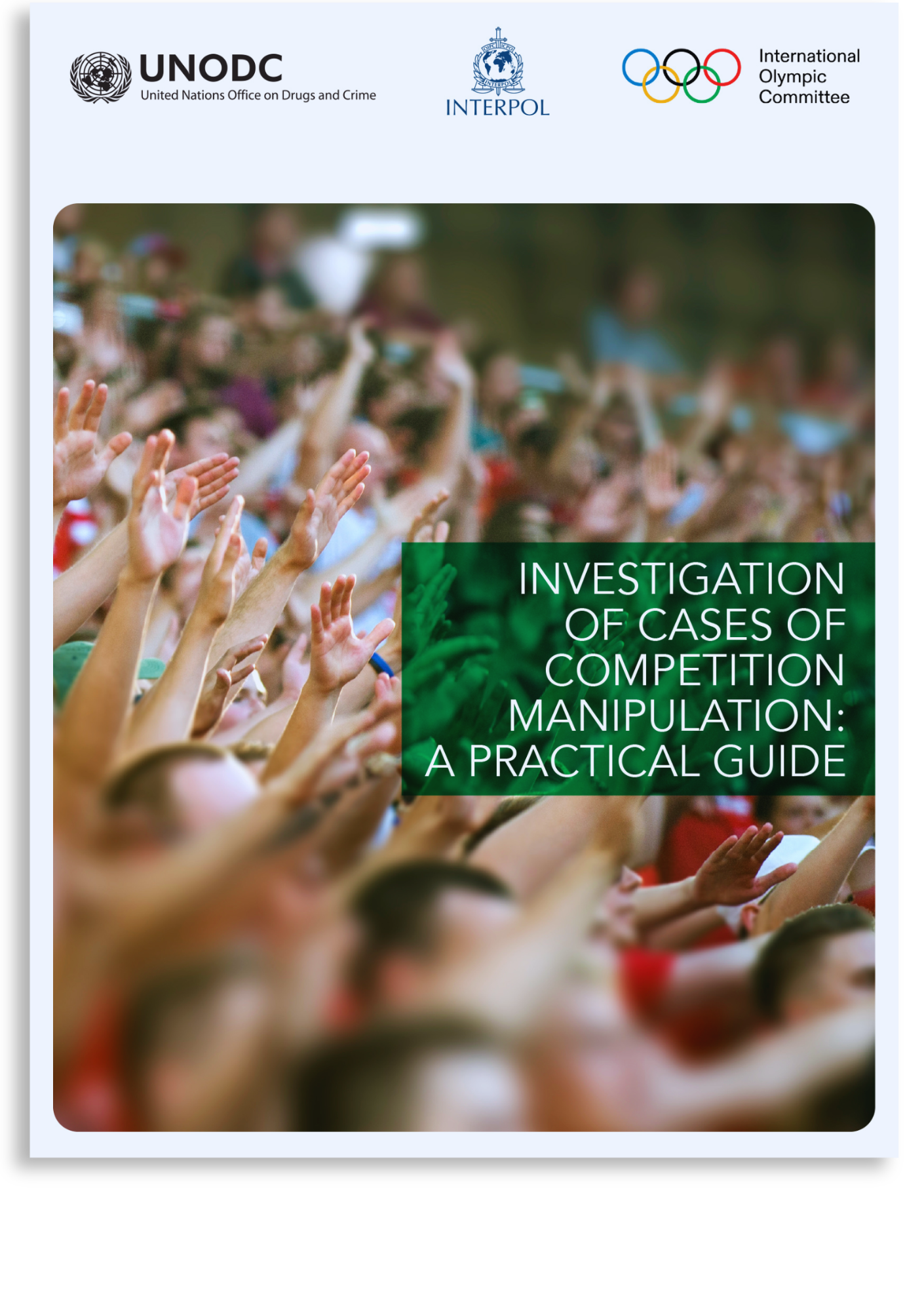
UNODC, IOC and Interpol, 2023
This guide is aimed at strengthening the capacity of relevant stakeholders to conduct effective and efficient investigations into allegations of competition manipulation. It seeks to do this by functioning as a practical tool to support those tasked with conducting criminal or sports disciplinary investigations into suspected cases of competition manipulation.

IPACS, 2023
The objective of this publication is to provide lawmakers, policymakers, prosecutors and other relevant officials with practical approaches, good practices and guidance to help tackle the threat posed by bribery to sport and society, and to help them enhance the credibility and transparency of sport.

UNODC, 2022
This advocacy paper examines the issues of crime and corruption in the transfer of athletes, with the aim of supporting governments, sports organizations and other relevant stakeholders in their efforts to prevent and combat crime and wrongdoing associated with the systems used for the transfer of athletes.

UNODC, 2021
Offering for the first time a truly comprehensive look at corruption in sport, the Global Report on Corruption in Sport reveals the staggering scale, manifestation and complexity of corruption and criminal networks in sport at international and national level.

UNODC and IOC, 2021
The resource guide aims to provide lawmakers, policymakers, prosecutors and other relevant officials with practical approaches, good practices and guidance to help tackle the threat posed to sport and to society by the manipulation of sports competitions and to enhance the credibility and transparency of sport.